

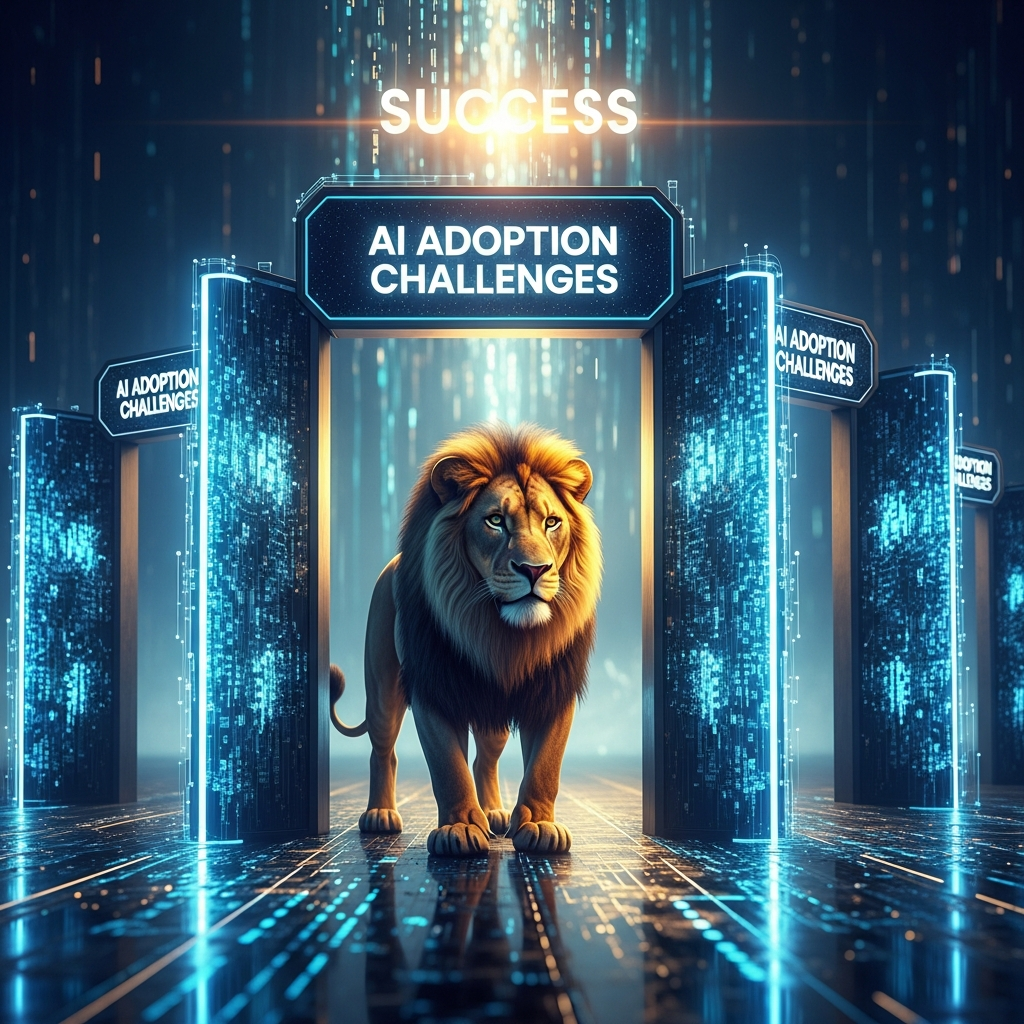
The AI Paradox: High Hopes vs. Hard Realities
Artificial intelligence is no longer a futuristic concept; it’s a transformative force reshaping industries in 2025. While the potential benefits are immense, many organizations are hitting a wall. The path to successful integration is filled with significant AI adoption challenges that can stall progress and diminish returns. Understanding these hurdles is the first step toward building a resilient and effective AI strategy.
Challenge 1: Poor Data Quality and Management
The most powerful AI algorithm is useless without high-quality data. The principle of ‘garbage in, garbage out’ is more relevant than ever. Many businesses suffer from data silos, inconsistent formatting, and incomplete information. These issues directly impact the accuracy and reliability of AI models, leading to flawed insights and a lack of trust in the technology.
Solution: Invest in a robust data governance framework. Prioritize data cleansing, establish clear data management protocols, and use tools to unify disparate data sources. A clean, accessible, and well-managed data pipeline is the bedrock of any successful AI initiative.
Challenge 2: The Widening AI Skills Gap
One of the most persistent barriers to AI adoption is the shortage of qualified talent. Finding data scientists, machine learning engineers, and AI specialists is highly competitive and expensive. Furthermore, existing teams often lack the necessary data literacy to work effectively with AI-driven insights, creating a gap between the technology’s potential and the organization’s ability to leverage it. As confirmed by recent Gartner research, a lack of technical skills remains a top obstacle.
Solution: Focus on upskilling and reskilling your current workforce. Invest in training programs that enhance data literacy across all departments. Create cross-functional teams that pair technical experts with business leaders to ensure AI projects are aligned with real-world needs.
Challenge 3: Navigating Security and Compliance Risks
As AI systems consume vast amounts of data, they introduce new vulnerabilities. Protecting sensitive customer and corporate information is paramount. Businesses face immense pressure to comply with regulations like GDPR while safeguarding against data breaches. The complexity of AI models can sometimes make it difficult to ensure they are secure and transparent, posing a significant risk to an organization’s reputation and bottom line.
Solution: Adopt a ‘security-by-design’ approach. Integrate security protocols into every stage of the AI development lifecycle. Establish clear ethical guidelines and AI usage policies to ensure compliance and build trust with stakeholders.
Challenge 4: Integrating AI with Legacy Systems
Many established companies run on complex, outdated IT infrastructure. These legacy systems were not designed for the demands of modern AI applications, making integration a costly and complicated challenge. Attempting to layer sophisticated AI solutions on top of rigid, monolithic architecture often leads to performance issues, scalability problems, and project failure.
Solution: Develop a phased modernization plan. Use APIs (Application Programming Interfaces) and middleware to create bridges between old and new systems. Prioritize cloud-based solutions that offer greater flexibility and scalability for AI workloads.
Challenge 5: Overcoming Organizational Resistance
Technology alone does not guarantee success; people do. Employee fear of job displacement, skepticism from leadership, and a general resistance to change can quietly sabotage even the most promising AI projects. Without clear communication and strong executive buy-in, AI adoption can stall before it ever truly begins. According to the latest McKinsey Global Survey on AI, organizational change is a key factor in realizing value.
Solution: Champion a culture of innovation through effective change management. Start with small, manageable pilot projects to demonstrate clear value and build momentum. Communicate transparently about the goals of AI adoption, emphasizing its role as a tool to augment human capabilities, not replace them.
Your Strategic Roadmap for Successful AI Adoption
Overcoming AI adoption challenges requires more than just technology; it demands a holistic strategy. By focusing on a strong data foundation, investing in your people, prioritizing security, planning for integration, and managing organizational change, you can navigate the complexities of AI and unlock its transformative potential for your business in 2025 and beyond.
Would you like to integrate AI efficiently into your business? Get expert help – Contact us.